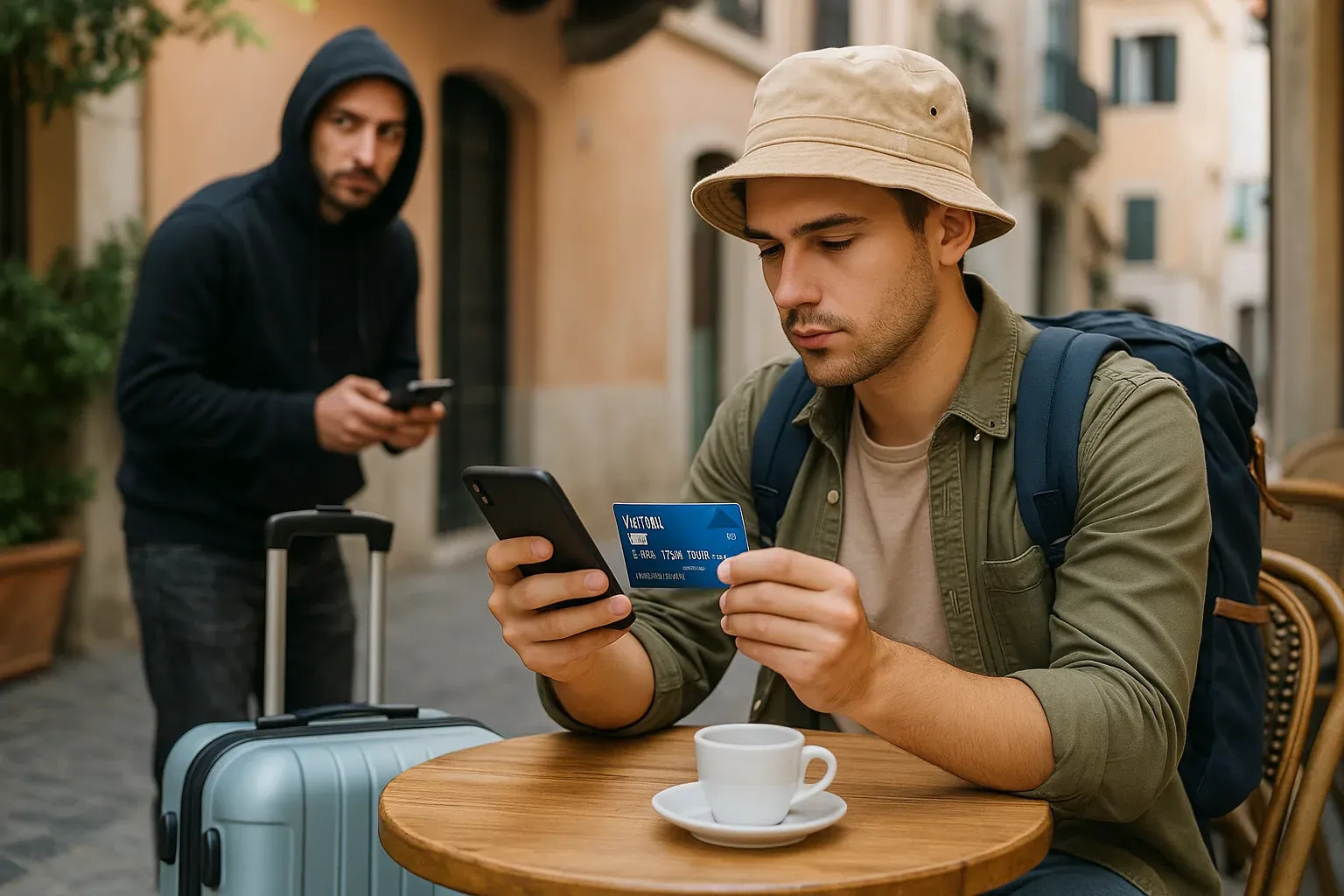
Safeguard your payment cards with our expert guide: emerging vectors, zero-liability rules, and practical field solutions.
Credit Card Security on Vacation
The definitive playbook for secure in-person and digital transactions at home and abroad
As vacation season approaches, securing your electronic payment methods becomes mission-critical. With over 3.9 million fraudulent transactions recorded in the first half of 2024 across European markets alone, accounting for over €584 million stolen, every traveler needs to master modern payment safeguards. This comprehensive guide helps you select and safely configure payment cards, whether vacationing domestically or traveling internationally.
Express Checklist: 5 Minutes to Secure Your Holiday Spending
📅 Expiration Dates
Ensure your cards do not expire while you are abroad
💰 Temporary Limits
Adjust your withdrawal and spending ceilings via mobile app
📱 Push Notifications
Enable real-time transaction SMS/push alerts
🌍 Travel Notices
Notify your financial institution of your destination itinerary
🏦 Card Types for Your Travels
Traditional Premium Banking Cards
Your choice of payment card directly dictates your baseline level of protection on holiday. Premium cards such as Visa Infinite/Signature and World Elite Mastercard offer comprehensive travel insurance packages with emergency medical coverage up to €155,000 and trip cancellation guarantees up to €5,000. These tier-one cards include 24/7 global concierge assistance and emergency cash disbursement worldwide.
| Card Tier | Emergency Medical | Trip Cancellation | 24/7 Global Support | Foreign FX Fees |
|---|---|---|---|---|
| Standard Debit / Classic | €11,000 | €800 | ❌ | Standard fees (2-3%) |
| Visa Premier / Signature | €155,000 | €5,000 | ✅ | Discounted fees |
| Gold / World Mastercard | €155,000 | €5,000 | ✅ | Discounted fees |
| Digital Neobanks (Revolut/Wise) | Tier dependent | - | ✅ | 0% interbank FX |
Neobanks: The Frictionless Travel Revolution
Modern fintech accounts and neobanks have transformed cross-border transactions by eliminating foreign exchange markups. Leading providers offer unlimited zero-fee foreign currency payments and ATM withdrawals up to designated thresholds. Revolut stands out by allowing users to instantly generate up to 5 distinct virtual cards to budget and sandbox expenses per destination.
✅ Essential Pre-Departure Verifications
Mandatory Card Audits
Three weeks prior to departure, perform these critical checks. Verify the validity date across all physical cards to ensure none expire during your trip. Most banks strictly refuse to ship replacement cards to international forwarding addresses, leaving stranded travelers without funds.
Review your spending and ATM withdrawal limits in your banking app. Withdrawal limits typically operate on a rolling 7-day window, while point-of-sale limits operate on a rolling 30-day window. Request a temporary 50% ceiling increase to accommodate unexpected travel expenses, hotel security holds, or rental car deposits.
Configuring Real-Time Security Alerts
Always enable instant push notifications for every transaction. Immediate alerts empower you to identify and freeze unauthorized charges within seconds. Customize threshold alerts: for example, trigger instant verification for any foreign withdrawal exceeding €200 or online transaction over €100.
Log a travel notice with your bank detailing your itinerary and travel dates. Automated anti-fraud heuristics frequently freeze cards upon seeing out-of-region activity, especially in non-SEPA jurisdictions.
💳 Virtual Cards: The Privacy Breakthrough
Modern Tokenized Payment Architecture
Virtual cards represent the single most impactful innovation for securing transactions abroad. Payment tokenization replaces primary account numbers (PAN) with randomly generated mathematical tokens, rendering intercepted card data completely useless to hackers and rogue payment gateways.
Major European banks now offer instant virtual cards stored inside digital wallets (Apple Pay, Google Wallet). These virtual credentials permit instant merchant spending while isolating your underlying checking account.
Disposable Ephemeral Cards (Revolut / Fintech)
Single-use disposable virtual cards dynamically regenerate PAN, expiration, and CVV details immediately after each completed charge. You can deploy dedicated sub-cards segmented specifically by category (e.g., flight bookings, hotel reservations, local transit). This sandboxing strategy permanently eliminates the danger of credential harvesting or recurring fraudulent debits.
🔐 Anti-Fraud Technologies: Modern Shields
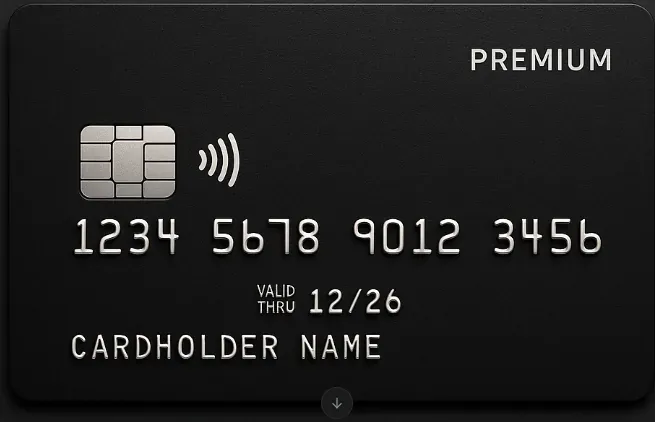
Core Engineering Innovations Safeguarding Your Funds
EMV Microchip + Dynamic Cryptograms
Modern EMV chips generate an immutable, single-use cryptographic signature per transaction. This architectural design neutralizes classic magnetic stripe cloning and has slashed counterfeit card fraud by 87% across EU banking networks.
E-Ink Displays (Dynamic CVV)
Physical cards equipped with integrated e-ink micro-screens automatically refresh their 3-digit security code (CVV) every hour, rendering stolen static card numbers obsolete for card-not-present fraud.
On-Card Biometric Sensors
Next-generation biometric payment cards feature integrated fingerprint readers. The card remains electrically disabled unless authentic capacitive skin contact matches the enrolled fingerprint profile.
AI-Powered Transaction Screening
Machine learning risk engines analyze behavioral telemetry in real time, detecting anomalies and halting suspicious card swipes in under 0.3 seconds.
The Humpich Case: The Historical Turning Point
In 1998, French computer scientist Serge Humpich famously exposed critical architectural flaws in legacy banking cards. He demonstrated two major vulnerabilities:
- A logic flaw enabling "yescards" that validated arbitrary PIN codes offline
- A cryptographic weakness in the small RSA key sizes implemented at the time
While Humpich was prosecuted, his research forced the global financial industry to accelerate the rollout of modern hardened EMV standards, mutual authentication, and cryptographic tokenization.
🛡️ Domestic vs. International Best Practices
Optimizing Transactions Domestically
When traveling domestically, favor contactless payments (NFC / Apple Pay) for everyday expenses to minimize physical card handling and eliminate skimming risks. Always inspect POS terminals for overlays, and prioritize indoor automated teller machines (ATMs) located within secure bank lobbies over stand-alone street kiosks.
International Field Security Strategies
Abroad, exercise heightened vigilance. Avoid ATMs situated in poorly lit or unmonitored tourist alleyways. When prompted at payment terminals, always opt to be billed in the local currency rather than your home currency to avoid predatory Dynamic Currency Conversion (DCC) markups.
🔐 Non-Negotiable Golden Rules
Secret PIN
Never write down or digitally screenshot your PIN
Card Records
Store emergency card numbers in an encrypted vault
Shielding the Keypad
Always physically shield your PIN with your free hand
Line of Sight
Never allow staff to walk away with your card out of view
PIN Retries
Avoid 3 consecutive wrong PIN entries to prevent card capture
Transaction Receipts
Retain physical slips and cross-check online statements
🔒 Securing Online Bookings & Travel Reservations
Two-Factor Authentication
Enforce 3D Secure biometric confirmation for all online vacation bookings.
HTTPS Verification
Verify SSL certificates and check for lock icons on hotel booking portals.
Phishing Deals
Be cautious of unrealistically cheap holiday rentals sent via unsolicited messaging apps.
Avoid Autofill Storage
Never permit browser autofill to store raw CVV codes or payment details.
Untrusted Public Wi-Fi
Never execute financial transactions over unencrypted airport or hotel Wi-Fi without a VPN.
OS Hygiene
Keep your mobile operating system and banking apps fully patched before flying.
⚠️ High-Risk Country Rankings for Payment Fraud
👇 Click on each regional zone header to expand or collapse specific risk details.
According to comprehensive data from the European Central Bank (ECB) and European Banking Authority (EBA), France accounts for 3,047,131 fraudulent transactions in single-half audit windows, representing 42% of total European card fraud volume (€211M+ stolen).
Context: This high volume correlates with intense domestic card adoption, with payment cards representing over 58% of all point-of-sale transactions.
Major European destinations with elevated card-skimming and pickpocketing risks reported by ECB/EBA monitors:
💡 Hover over each destination to reveal specific hotspot details:
Spain ranks second overall with over one million flagged fraudulent attempts. Coastal resort zones and high-density tourist landmarks are frequently targeted by organized skimming rings.
These international destinations require disciplined application of standard operational card security:
💡 Hover over each destination to review specific advice:
🛡️ Travel Insurance and Coverage Guarantees
Premium Card Insurance Perks
Visa Signature/Infinite and World Elite Mastercard cards incorporate extensive travel guarantees. Trip cancellation insurance typically reimburses up to €5,000 per claim for trips canceled due to covered emergencies (illness, injury, severe travel disruptions). Lost luggage protection pays out up to €850 to cover lost or damaged personal belongings.
Emergency international medical coverage provides up to €155,000 in emergency hospitalization and medical transport expenses abroad. This safety net includes medical repatriation, emergency doctor dispatches, and hospital deposit advances. Protections extend automatically to your spouse and dependent children traveling on the itinerary.
🚨 Emergency Protocols & Hotlines
24/7 Global Card Assistance Hotlines
Immediate Incident Response Steps
Upon discovering unauthorized activity, freeze your card immediately inside your mobile banking application or by dialing the emergency fraud hotline. File a police report locally or via your national cybercrime reporting portal. Under consumer banking regulations, you have a statutory window (typically up to 70 to 120 days) to formally dispute unauthorized charges and obtain full reimbursement.
📚 Technical Glossary
Essential Payment & Security Terminology
🧠 Interactive Quiz: Test Your Travel Security IQ
Click on any card to reveal the answer
Question 1
Which European country records the highest volume of annual card fraud attempts?
Answer
France with over 3,047,131 fraudulent attempts recorded in a single six-month audit window.
Question 2
How many digits compose the standard CVV on Visa and Mastercard cards?
Answer
3 digits on the signature panel (American Express utilizes 4 digits on the front).
Question 3
What is payment "tokenization"?
Answer
Replacing sensitive card numbers with a unique surrogate token, preventing intercepted numbers from being reused.
Question 4
How long do you typically have to dispute unauthorized payment charges?
Answer
70 to 120 days depending on jurisdiction, after which banks process statutory chargebacks.
Question 5
What is ATM skimming?
Answer
Illegally capturing card data via counterfeit reader overlays and micro-cameras placed on physical ATMs.
Question 6
What is the maximum statutory consumer deductible for unauthorized card fraud?
Answer
€50 maximum under European law, virtually always waived to €0 under zero-liability protection rules.
📝 Final Checklist: Travel With Peace of Mind
Your Holiday Card Security Checklist
✅ 3 Weeks Prior
- Check card expiry dates
- Request temporary limit increases
- File bank travel notifications
✅ 1 Week Prior
- Enable real-time push alerts
- Generate virtual cards
- Record emergency hotline numbers
✅ Departure Day
- Distribute backup cards in bags
- Ensure offline banking app access
- Carry a modest cash reserve
✅ In the Field
- Use official indoor bank ATMs
- Shield PIN input at all times
- Review notifications daily
Executive Summary
Vacation financial security relies on thorough preparation and disciplined habits. Align your payment strategy with your destination: leverage premium cards for medical and travel insurance guarantees, and neobanks for zero-fee foreign exchange. Use virtual cards for all advance online bookings.
Maintain situational awareness at cash machines, keep a secondary payment method isolated in your hotel safe, and memorize emergency freeze protocols. By following these measures, you ensure your holiday remains completely focused on rest and adventure.
Safe and secure travels! 🏖️✈️
📚 Verified References & Official Sources
🔗 European Central Bank - Payment Fraud Reports
Official ECB statistical bulletins analyzing card payment fraud trends and card-not-present security metrics across Europe.
🔗 EMVCo - Technical Payment Specifications
Global technical body managing payment tokenization, contactless transaction standards, and chip cryptogram specifications.
🔗 FTC Consumer Advisory - Payment Safety
Consumer protection guidelines for reporting unauthorized electronic transactions and zero-liability dispute frameworks.
🔗 Bank for International Settlements (CPMI)
Global insights and recommendations on cross-border payment resiliency and systemic financial cyber defense.
🔗 FBI Cybersecurity - Skimming Defense
Tactical advice on recognizing physical card-skimming hardware and mitigating point-of-sale tampering.
👥 Comments
Comment on this article