SafeITExperts

SafeITExperts

Your expert guide to cybersecurity and digital privacy. Security hardening for all platforms : Windows, macOS, Linux, and Android. Solutions aligned standards : NIST and ANSSI for comprehensive digital protection.


IT Problem: Solve Without Breaking

Publié par Marc sur 22 Avril 2026, 05:45am

Catégories : #IT problem solving, #troubleshooting method, #root cause analysis, #proactive posture

Structured methodology to solve IT problems without making things worse. 8-posture reading grid: proactive, preventive, reactive, post-reactive.

Structured methodology to solve IT problems without making things worse. 8-posture reading grid: proactive, preventive, reactive, post-reactive.

IT Problem: Solve Without Breaking | SafeITExperts
Open table of contents

IT Problem: Solve Without Breaking

Introduction — Understand Before Acting

This guide isn't just another troubleshooting tutorial. It provides a reading method reusable for any IT problem: forum, ticket, AI prompt. Here is the observation that motivated it.
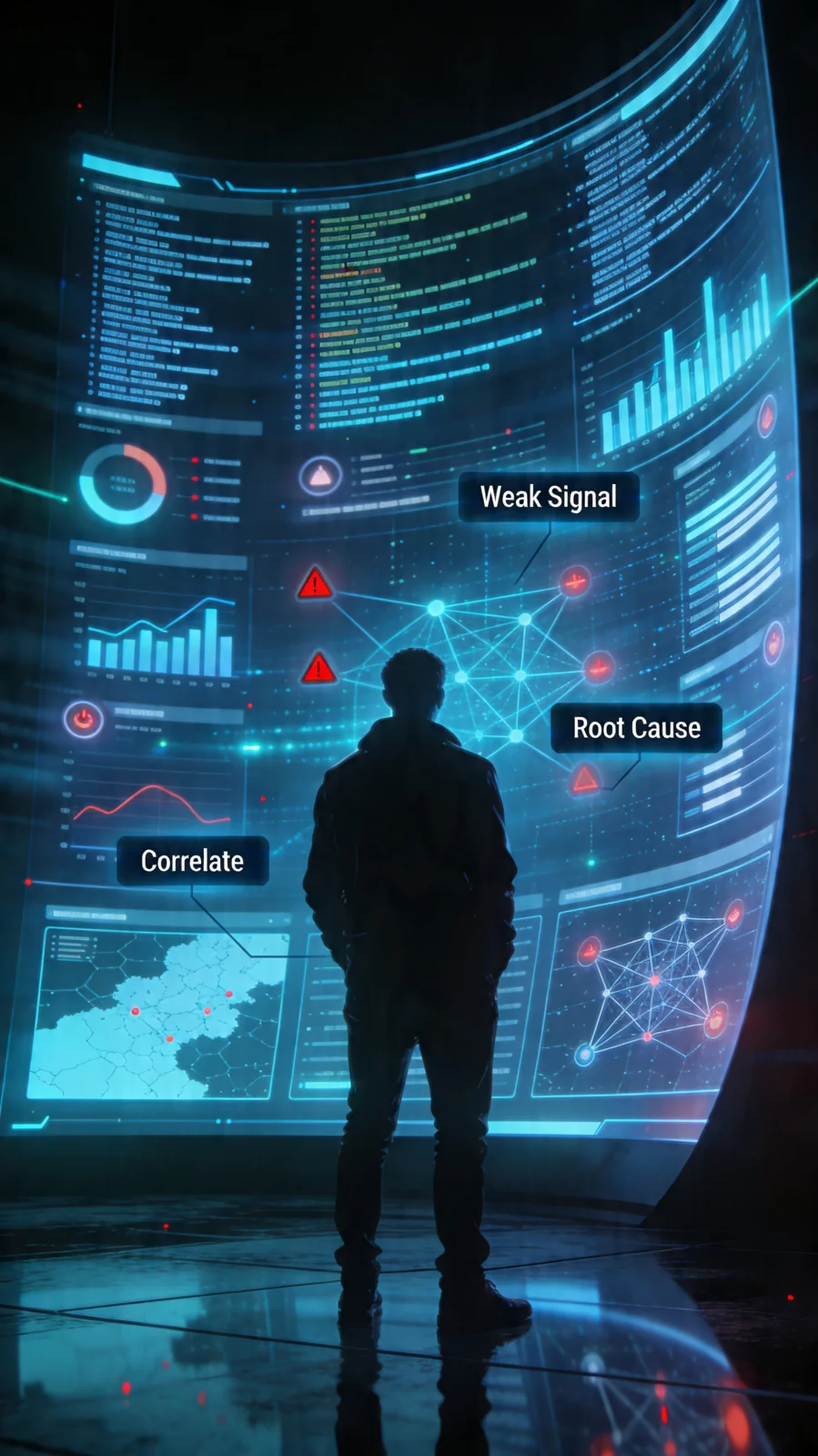
Realistic 3D illustration of an expert Linux administrator diagnosing a system issue from logs and alerts
🔍 Why this method? — Use the interactive menu below to navigate through each finding. 4 findings :
Observation
Costs
Mistake
Method
The problem
SafeITExperts ObservationOBSERVATION
On technical forums, a recurring pattern has been identified: the same issue bounces between multiple responders, forcing the user to:
Typical journey of a stuck user
# Observed ineffective cycle:
Step 1 → Post a message on a forum
Step 2 → Wait, without a clear answer
Step 3 → Repost on another space
Step 4 → Browse various websites
Step 5 → Query an AI without a methodological framework
Step 6 → Start over elsewhere...
# Result: dispersion, time waste, confusion
💡 This cycle isn't inevitable. It results from a lack of framework to frame the problem from the start.
The real cost of chaotic troubleshootingIMPACT
Many problems eventually get solved, but rarely at an acceptable cost. Here's what's often overlooked in the equation:
What the user really loses
# Invisible costs of poorly framed troubleshooting:
⏱️ Significant time     → Hours lost in trial and error
🔄 Useless trials     → Commands tested without understanding
📋 Poorly prioritized actions → Starting at the end, ignoring essentials
💥 Premature changes → Touching the system before analyzing
📉 Possible degradation   → Making the problem worse instead of better
# The cost isn't just time. It's also trust.
⚠️ System changes proposed too early are the main factor worsening situations.
The mistake isn't technical. It's methodological.ANALYSIS
The core problem isn't a lack of technical skill. It's a lack of method in formulating and solving the problem.
Recurrent confusions
# What we see too often:
 Looking for a solution before defining the problem
 Asking for a command before describing the current state
 Applying a fix before analyzing the findings
 Confusing:
   • symptom ≠ cause
   • urgency ≠ importance
   • proof ≠ impression
   • real exposure ≠ perception
💡 Confusing these elements systematically leads to inappropriate actions, even with the best intentions.
The serious troubleshooting sequenceMETHOD
Structured troubleshooting relies on a simple but non-negotiable sequence. Each step must be validated before moving to the next.
The 3 fundamental steps
# Troubleshooting sequence:
Step 1Audit of current state
           • Describe the environment
           • Collect evidence
           • Understand the context

Step 2Analyze findings
           • Identify symptom vs cause
           • Assess real urgency
           • Determine exposure

Step 3Action decision
           • Propose targeted fixes
           • Prioritize interventions
           • Plan rollback
Underlying principles
# This logic is based on:
🔍 Evidence      → Act on findings, not impressions
📝 Traceability → Document every step and decision
🛡️ Distinction → Prevention ≠ Preparation ≠ Response ≠ Improvement
# Each posture has its role. None replaces the other.
💡 This approach aligns with ITIL incident management and security incident response standards.

The Reading Grid

Before diving into the chapters, here is the matrix that forms the basis of this article.

PhasePostureObjectiveMain RiskKey ChecksCriticality
BeforePro-activePrevent incident before impactUndetected systemic failuresSupervision, logging, regular auditLow → High
BeforePreventiveReduce failure probabilityUnmitigated failureUpdates, backups, periodic checksVariable
BeforePre-activeSecure intervention conditionsDegraded interventionAccess, backups, procedures, prerequisitesMedium → High
BeforePre-reactiveAnticipate response before incidentIneffective responseTests, scenarios, recovery, drillsMedium → Critical
DuringPro-reactiveLeverage weak signals before breakdownUninterpreted anomaly escalationCorrelation, drifts, recurring anomaliesLow → High
DuringReactiveRespond quickly without losing diagnosisWorsening due to rushed actionQualification, traceability, containmentHigh → Critical
AfterPost-reactiveConsolidate incident recoveryDeceptive return to normalRoot cause, remediation, stability, post-mortemMedium → Critical
AfterPost-preventiveAssess preventive measure effectivenessFalse sense of securityBefore/after indicators, maintenance checksLow → High

How to Read This Matrix

This matrix isn't for decoration in an article or ticket. It's for correctly framing the problem. It forces you to answer three fundamental questions:

  • When are we relative to the problem: before, during, after?
  • What are we really seeking: prevent, reduce, prepare, detect, respond, stabilize, verify?
  • What does the decision rely on: intuition, habit, or evidence?
Warning: A command proposed too early can: mask the symptom without fixing the cause, degrade a still recoverable service, break an unidentified dependency, delete useful diagnostic elements, or waste time on a wrong path.

The 8 Interactive Postures

Navigate between postures using the left menu. Each panel details the objective, key checks, and guiding question.

🧩 Reading Grid — IT Troubleshooting — 8 postures
4 BEFORE
2 DURING
2 AFTER
Phase BEFORE
Phase DURING
Phase AFTER
Chapter 1 — Pro-active: See it coming before impactBEFORE
The pro-active posture is the posture of visibility. It acts before the incident, at a time when nothing may be "broken" yet, but where you must already be able to spot if a drift is preparing. Its role is not to fix. Its role is to prevent the system from becoming opaque.
Guiding question: Did we have sufficient visibility to foresee the problem?
What we look for here
# What we check:
- Whether the system is observable
- Whether the current state is readable
- Whether drifts leave traces
- Having enough context to understand a future incident
# Risk: missing early signs, blind spots
💡 Useful phrasing example:
Instead of "My system behaves strangely, what do I do?", write:
"Here's the log state, observed symptoms, when they started, what changed recently, and what indicators show."
Tip
Pro-active isn't about hoarding tools. It's about making the system readable.
Chapter 2 — Preventive: Reduce probability before failureBEFORE
The preventive posture works on the probability of a problem occurring. The challenge is no longer just visibility, but the existence of routines capable of reducing structural risk.
Guiding question: What measures should have reduced the probability of this problem?
What we check
# Verification checklist:
- Followed updates
- Configuration consistency
- Control routines
- Real backups & restore tests
- Proof of execution
# Trap: an unverified rule isn't prevention. It's an intention.
💡 Good prevention isn't abstract. It's proven.
Chapter 3 — Pre-active: Prepare intervention before actingBEFORE
The pre-active posture concerns intervention conditions. The problem isn't necessarily handled yet, but we already know an action may become necessary. We must verify if we can intervene without breaking things further.
Guiding question: Are we ready to intervene without worsening the situation?
Verification checklist
# Pre-intervention checks:
- Access available
- Prerequisites known
- Backups usable
- Minimal documentation
- Dependencies identified
- Rollback plan
💡 Good reflex: Before any proposal, ask: test or prod environment? critical service? backup? recent change? local access available?
Warning
A technically correct action can become a bad one if proposed: without a safety net, without reading dependencies, without assessing rollback risk, or without knowing the exact context.
Chapter 4 — Pre-reactive: Prepare response before incidentBEFORE
The pre-reactive posture isn't the response itself. It's response preparation. It focuses on what has been thought, tested, or simulated before the incident actually occurs.
Guiding question: Have we prepared the response before needing it?
What we look for here
# Verification checklist:
- Scenarios prepared
- Drills completed
- Runbooks & escalation procedures
- Recovery modes
- Actionable lessons learned
💡 Preparing the response isn't being alarmist. It's reducing improvisation. Without preparation, even a skilled team often reacts in disarray.
Chapter 5 — Pro-reactive: Read weak signals during breakdownDURING
The pro-reactive posture occupies a particularly interesting zone: we're no longer fully "before", but not yet in a fully established incident. Something is drifting, accumulating, repeating, or degrading.
Guiding question: Are there weak signs announcing an imminent breakdown?
What we look for here
# Signs to monitor:
- Error repetitions
- Log inconsistencies
- Slow drifts
- Weak but persistent alerts
- Unusual variations & correlations
💡 A good prompt shouldn't just say "I have a bug", but specify: "The symptom is intermittent, appears in this context, started after this change, and here are additional signs."
Chapter 6 — Reactive: Respond quickly without losing diagnosisDURING
The reactive posture is the one everyone knows. It's also the one that produces the most errors when not framed. In incident situations, pressure pushes for fast action. But acting fast doesn't mean acting randomly.
Guiding question: How to respond quickly without losing diagnostic control?
What we look for here
# What we seek:
- Symptom qualification
- Timeline establishment
- Impacted perimeter
- Decision traceability
- Containment & coordination
⚠️ Warning: The worst reactive responses are those that immediately reboot without collection, change multiple parameters at once, or confuse temporary symptom disappearance with actual resolution.
In reactive mode, speed is useful. Rushing is destructive.
Chapter 7 — Post-reactive: Truly stabilize after incidentAFTER
The post-reactive posture begins when the incident seems over. That's precisely why it's critical. Many teams stop too early at "it works again".
Guiding question: Did the response truly stabilize the system and remove the cause?
What we look for here
# Post-incident verification:
- Root cause identified
- Fix documented
- Post-fix stability validated
- No immediate recurrence
- Consolidated timeline & post-mortem
💡 Common trap: False return to normal. The symptom disappears, but the cause isn't understood, configuration remains fragile, and the same failure will return.
Post-reactive turns a repair into a resolution.
Chapter 8 — Post-preventive: Verify prevention actually worksAFTER
The post-preventive posture is a posture of maturity. It acts after preventive measures are put in place and answers a too-rarely asked question: do the added measures actually produce the expected long-term effect?
Guiding question: Have the preventive measures put in place actually improved the situation?
What we look for here
# Measure assessment:
- Measured effectiveness
- Residual drifts
- Long-term sustainability
- Persistent gaps
- Before/after indicators
💡 This posture avoids two classic errors: believing a measure exists so it works, and keeping useless controls simply because they were deployed. Post-preventive avoids "paper security".

How to reuse this method by an everyday user (Windows, Linux, macOS...)

This guide applies to all ecosystems. Whether on Windows, Linux, or macOS, the principle remains identical: a well-framed problem gets a targeted response. Here's a concrete example inspired by a real WiFi degradation case.

📝 Concrete Example — WiFi Problem — before / after the method
Poorly framed
Well framed
Analysis
Resolution
Comparison
What we usually see on forumsTOO VAGUE
A user posts without context, without history, without evidence. Here's the typical message:
# Classic forum message:

"My WiFi keeps dropping, what do I do?"

# Or:
"Connection issue, I'm on Windows 11"
"Anyone have a fix?"

# Missing:
- When did it start?
- Did it evolve? How?
- What have you tried?
- Was the ISP contacted?
- Any recent changes?
⚠️ Without context, responders scatter in all directions. Result: generic advice, sometimes mismatched, often time-consuming.
Typical responses (without context)DANGEROUS
# Common replies without prior analysis:
→ "Reinstall your WiFi drivers"
→ "Change your DNS to 8.8.8.8"
→ "Disable IPv6 in the registry"
→ "Reinstall Windows / macOS"
→ "Buy a new router"

# Result:
- Time wasted on false leads
- Unnecessary system changes
- Risk of breaking a working system
- User lost on what to try next
The same problem, well framed with the SafeITExperts methodSTRUCTURED
After reading the article, the user structures their post using the reading grid. Context is clear, timeline is documented, attempted actions are listed.
# Structured forum post:

Phase        : During (progressive degradation)
Posture      : Pro-reactive → Reactive
Context      : ISP Router [model], PC [Windows/Linux/macOS],
               house ~90m², concrete walls
Symptoms     : WiFi micro-drops for 2 weeks
               → Frequency increased progressively
               → Worsened after router + PC reboot
Evidence     : - Intermittent ping loss (1-3%)
               - ISP contacted: line OK
               - Wired test: stable (0% loss)
Criticality  : Service degraded (remote work impacted)
Objective    : Identify cause before any modification
💡 With this format, responders immediately have a precise reading framework. They no longer start from an impression, but from documented context.
Why this phrasing changes everythingANALYSIS
The structured message lets responders immediately understand the problem nature and eliminate false leads before even proposing an action.
# What responders understand:
✔ Wired works → not an ISP issue
✔ Degradation is progressive → not a sudden failure
✔ Reboot didn't fix it → not a temporary software bug
# Immediate conclusion: environmental issue
Pertinent questions responders askTARGETED
Thanks to context, responders no longer guess solutions. They ask targeted questions that lead directly to the cause:
# Pertinent questions (instead of random commands):

 "How many WiFi devices are in the house?"
     → Checking saturation/interference

 "Any new devices recently?"
     → Environmental change detection

 "Which WiFi channel is used? (2.4GHz or 5GHz?)"
     → Channel occupancy check

 "Neighbors on same channel?"
     → Possible external interference

 "Drops on all devices or just one?"
     → Determines if router or endpoint issue
💡 These questions directly result from a well-framed context. Without context, responders would jump straight to solutions — often wrong ones.
Pertinent commands (after questions)TARGETED
# Windows:
netsh wlan show networks mode=bssid
# Linux:
sudo iwlist scanning | grep -i channel
sudo wavemon -s
# macOS:
airport -s
# These commands are now TARGETED, not random
Fast and clean resolutionRESOLVED
Thanks to well-framed context and targeted questions, the cause is quickly identified and the fix is simple.
# Identified cause (from answers):
- 3 new WiFi devices added to the house
  (smart speaker, IP camera, tablet)
- All on channel 6 (2.4GHz) → saturation
- Channel occupancy conflict detected

# Action applied:
→ Changed router WiFi channel
  • Channel 6 → Channel 11 (2.4GHz)
  • Or switch to 5GHz if available

# Result:
✅ Micro-drops gone immediately
✅ Stability restored (0% loss over 48h)
✅ No system changes needed
What was avoided thanks to the methodBENEFITS
# Without context, the user might have:
 Reinstalled WiFi drivers (unnecessary)
 Edited Windows registry (risky)
 Disabled IPv6 (could break services)
 Reinstalled the OS (extreme & useless)
 Lost 3-4 hours on false leads

# With the SafeITExperts method:
 Cause identified in under 30 minutes
 One single targeted action (change channel)
 No risky system modifications
 Understanding of the problem for the future
💡 A well-framed problem gets a targeted response. A poorly framed problem generates noise and unnecessary risks.
Tip: This structure is also an excellent prompt engineering example for AI. Copy it to get structured, targeted technical analysis without generic responses.

How to reuse this method in a forum

For a forum reader, this matrix helps structure a more useful post. Instead of posting a raw problem, you can already place it within a posture.

Simple structure example

# Recommended structure for a forum post:
- Phase         : before / during / after
- Posture       : pro-active, preventive, reactive, etc.
- Context       : host, service, recent change
- Symptoms      : what is observed
- Evidence      : logs, timeline, gaps, tests
- Criticality   : minor annoyance, degraded service, critical outage
- Objective     : understand, contain, prepare, fix, verify

With such a structure, response quality immediately rises. Responders no longer start from an impression. They start from a framework.

Conclusion

This approach doesn't promise to make all problems simple. However, it drastically reduces mismatched responses, unnecessary fixes, and time waste caused by poorly framed problems. It brings order to troubleshooting: first understand, then qualify, finally act.

And that's likely the most important point: good technical troubleshooting isn't just about skill. It's also about phrasing methodology. A well-framed problem more often gets a useful response than a poorly framed one, even if both describe the same underlying failure.

"In IT, you rarely save time by skipping the analysis step. You mostly earn the right to fix it right."

— SafeITExperts

Sources & Recommended Reading

Verified Sources by SafeITExperts

SourceThemeLink
Internal Auditing Best Practices 2026Continuous monitoring and risk-based planningRead →
Systems Hardening Best PracticesLeast privilege, safe configurations, and mandatory loggingRead →
Optimizing Linux Security in 2025Behavioral adjustments and effectiveness verificationRead →
Network Security Best PracticesBaselining for weak signals and proper containment strategiesRead →

Recommended SafeITExperts Reading

ArticleThemeLink
Linux Secure By Default? Comprehensive 2026 AuditFull Linux system audit, from context to concrete controlsRead →
OS Security Panorama 2026: Linux, Windows, macOS, BSDAn overview of modern OS risks and hardening strategiesRead →
sudo vs su: Complete Guide to Linux Privilege Elevation 2026Understanding the risks and best practices of privilege escalation during incidentsRead →
Linux Storage Guide 2025: Cloud, RAID, LVM, Btrfs & ZNS SSDStructuring robust storage to limit the impact of incidents and human errorsRead →

About the Author

Marc is the main editor of SafeITExperts, a bilingual FR/EN technical blog dedicated to cybersecurity, Linux, and digital sovereignty.

NetworkLink
Sitesafeitexperts.com
X (Twitter)@crisisdav
FacebookSafeITExperts
Bluesky@crisis23.bsky.social
Mastodon (Infosec)@safeitexperts
Emailsafeitexperts@safeitexperts.com

Share your experience

Have you used this reading grid to solve a complex problem? Share your feedback in comments or on socials with #SafeITExperts.

Article published on April 22, 2026 by Marc — SafeITExperts.
© SafeITExperts — Reproduction authorized with source mention.

Pour être informé des derniers articles, inscrivez vous :
Commenter cet article

Archives

Nous sommes sociaux !

Facebook X Bluesky Mastodon GitHub Reddit RSS

Articles récents