Click to open · ✕ or click outside to close

Summer Romance: Share Your Selfies, Not Your Secrets!
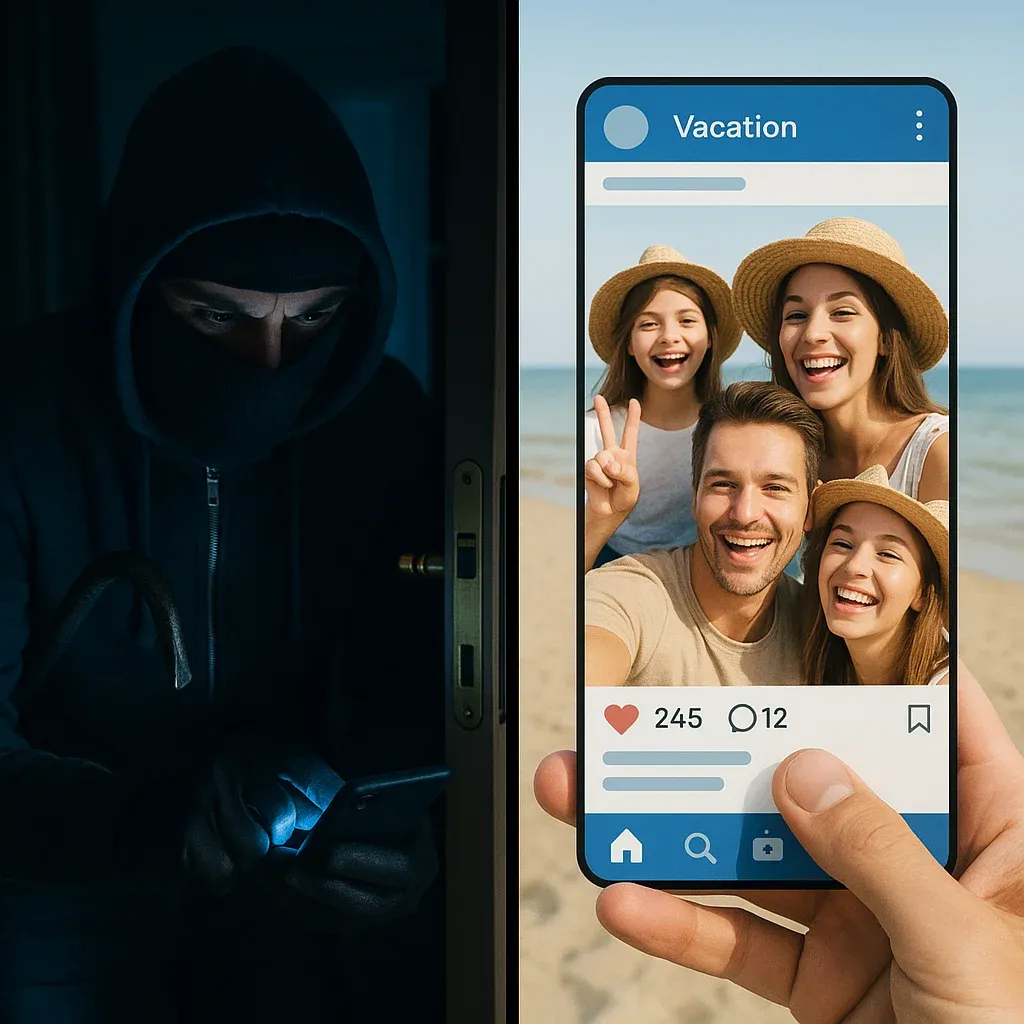
An interactive guide to protecting your home, personal privacy, and emotional well-being against summer cyber threats
Published on September 1, 2026Read time: 10 min
PrivacySocial MediaCybersecurityScamsVacations

Summer Romance: Share Your Selfies, Not Your Secrets!

Introduction

Summer is synonymous with sunshine, travel, and lively social feeds 🌞. However, unconstrained sharing can quickly spiral into a digital nightmare 😱. From home burglaries facilitated by real-time holiday stories to romance scams and sextortion extortion rings, seasonal vulnerabilities multiply.

0%
of burglars leverage social media reconnaissance
0
daily sextortion helpline calls during peak summer
0%
of urban burglaries linked to online oversharing

International insurance and law enforcement studies reveal that 78% of modern burglars actively monitor social platforms to identify empty residences, while reports of non-consensual image extortion spike during vacation windows. Here is how to enjoy your holiday without turning your public updates into an open invitation for malicious actors.

1. How Burglars Exploit Your Vacation Posts

🚨 The "Broadcast Absence" Trap

Empirical crime statistics show that one-third of households experience break-ins at some point, with over 13% occurring during holiday trips. Furthermore, up to 40% of victims in high-density urban areas were targeted based on intelligence gathered from social media updates.

📸 Real-Time Airport Check-ins
Broadcasting immediate departure status
Targeted break-in within 24–48 hours ⏱️
📍 Active Live Geolocation
Confirming distance from your primary residence
Provides thieves with an exact operational window ⏳
⏳ Public Vacation Countdowns
Broadcasting exact departure and return dates
Facilitates planned, methodical reconnaissance 🔍
💎 Showcasing High-Value Goods
Featuring luxury gear, watches, and tech
Enables precise, high-yield targeting 🎯
🔍
Case Study
Click to reveal a real-world social-enabled burglary
Click to flip

A luxury sneaker collector was burgled after posting daily geotagged stories on Instagram. The perpetrators completely ignored home electronics and entertainment systems, moving directly to the specific room where the collector's rarest inventory was stored.

🔗 Click below to read the source investigation: 📰 View Source Report ↗
Click to return

2. Summer Dating: When Romance Hides a Scam

💔 The Seasonal Surge in Emotional Exploitation

Summer consistently sees an uptick in romance fraud as threat actors exploit heightened emotional openness, leisure relaxation, and lower situational skepticism. Scammers take advantage of situations where:

😌 Relaxed Mindset
Lowered defenses and elevated baseline trust
🗺️ Shared Coordinates
Broadcasting real-time locations and travel stops
❤️ Seeking Romance
Openness to spontaneous cross-border connections
❓ Local Blind Spots
Unfamiliarity with regional fraud tactics
⚠️
The "Bezness" Trap
Click to understand this widespread tourist romance scam
Click to flip

In resort hubs, organized sweet-talkers build false romantic relationships with travelers to elicit financial transfers, luxury gifts, or residency paperwork. Victims frequently endure years of emotional distress and substantial financial loss before recognizing the fraud.

🔗 Click below to read the source investigation: 📰 View VSD Investigation ↗
Click to return

3. Sextortion and Intimate Image Abuse

📉 An Alarming Digital Epidemic

Surveys indicate that over 87% of young adults know someone targeted by non-consensual image distribution, and nearly three-quarters of young women experience harassment online. Reports of extortion escalate sharply during vacation months.

🔞
Seasonal Vulnerability Vectors
Click to learn how intimate extortion unfolds
Click to flip

Cyber-support helplines report that transient summer flings combined with rapid exchanges of intimate media over ephemeral chat apps dramatically amplify risk. Threat actors rapidly pivot from intimate chatting to blackmail, threatening immediate dissemination to family and employers.

🔗 Click below to read the source investigation: 📰 View Madmoizelle Report ↗
Click to return

4. Geolocation: When GPS Coordinates Betray You

📍 Dangerous Exposure Vectors

Environmental organizations warn that geotagging sensitive natural landscapes causes ecological damage, but the personal physical hazards are equally severe:

👣 Stalking & Harassment
Enabling real-time tracking of physical movements
🚨 Predatory Targeting
Pinpointing gathering hubs favored by young travelers
💸 Hyper-Localized Scams
Tailoring financial ruses based on your exact hotel or venue

Impact on Personal & Family Safety

🚨
Predatory Stalking
Real-time physical tracking and exposure
Click to flip

Broadcasting active GPS telemetry allows predators to map your holiday routes, daily routines, and temporary accommodations.

Click to return
💬
Digital Harassment
Targeted online hostility and extortion
Click to flip

Knowing a target is isolated away from their regular support network amplifies emotional vulnerability and fuels coordinated abuse.

Click to return
🛡️
Minors' Telemetry
Harvesting minors' location data
Click to flip

Inadvertent geotagging of children or teenagers through public stories exposes minors to severe profiling, tracking, and identity hazards.

Click to return
🔗 Expert Analysis Source (Mohammed Boumediane): 📰 View L'Info Durable Investigation ↗

5. Defensive Reflexes: Your Digital Survival Kit

⚙️ 5-Minute Privacy Hardening

📱 Instagram
Disable Geolocation
Settings › Privacy › Location Services › OFF
👥 Facebook
Limit Audience
Settings › Privacy › Post Audience › Friends Only
👻 Snapchat
Mask Map Coordinates
Settings › See My Location › Enable Ghost Mode
🎵 TikTok
Private Account
Settings › Privacy › Private Account › ON

✅ Golden Rules for Holiday Posts

1
⏱️ The #Latergram Rule
Publish holiday albums only after returning safely home
2
👥 Segmented Private Groups
Use close friends groups for real-time family updates
3
📍 Coarse Regional Geotags
Tag broad regions rather than specific hotels or villas
4
💎 Obscure High-Value Assets
Keep jewelry, cash, and high-end hardware out of frame
5
⏳ Ephemeral Stories
Favor temporary stories over permanent feed posts

🛡️ Incident Response for Image Extortion

1
✋ Sever Communication
Immediately block the extortionist across all channels
2
💾 Preserve Evidence
Capture unedited screenshots of usernames and chats
3
🚫 Never Pay Ransom
Paying invariably leads to escalated demands
4
🚨 Formal Law Enforcement Report
Report to platform moderation and cybercrime authorities

Vacation Security Glossary

Key terms essential for navigating modern holiday cyber risks. Click on each card to reveal the definition!

OSINT
Click to reveal
Open Source Intelligence: The collection and analysis of publicly accessible social media and online data used by criminals to profile targets.
Click to return
Image-Based Abuse
Click to reveal
The non-consensual distribution of private or intimate photographs with the intent to coerce, harass, or humiliate victims.
Click to return
Bezness
Click to reveal
A cross-border romance fraud where local actors simulate affection with tourists to extract financial assets or travel residency permits.
Click to return
Geolocation
Click to reveal
Real-time GPS coordinate tagging embedded in social posts, frequently exploited by burglars to verify empty residences.
Click to return
Sextortion
Click to reveal
Digital extortion where perpetrators threaten to broadcast sensitive personal media to employers or social contacts unless ransoms are met.
Click to return
Cyber Helplines
Click to reveal
Dedicated law enforcement and civil rights reporting portals providing rapid intervention for victims of online stalking and extortion.
Click to return

Vacation Security Quiz

Test your awareness of seasonal cyber risks and social media habits. Click each card to reveal the expert response!

1
What percentage of burglars use social media for target reconnaissance?
Click to flip
78% of modern burglars monitor social platforms to identify unoccupied residences during holiday periods.
Click to return
2
What characterizes a "bezness" romance scam?
Click to flip
Pretending romantic attraction to manipulate tourists into providing cash transfers, gifts, or immigration sponsorship.
Click to return
3
What is the immediate response if targeted by sextortion?
Click to flip
1. Sever all contact
2. Preserve chat evidence
3. Never pay extortion demands
4. Report immediately to cyber authorities
Click to return
4
Why should live geolocation be disabled on vacation?
Click to flip
To eliminate stalking vectors, protect minor privacy, and prevent criminals from verifying your empty home.
Click to return
5
When is the safest time to publish vacation photo albums?
Click to flip
After returning safely home (#latergram), or exclusively within restricted private messaging circles.
Click to return
6
Where should online fraud and harassment be reported?
Click to flip
To national cybercrime reporting portals (e.g., IC3, Action Fraud, PHAROS) and platform safety teams.
Click to return

You have completed the quiz!

Conclusion: Mindful Holiday Security

Enjoy Your Summer With Digital Confidence!

📊
Growing Awareness
43% of travelers already protect their plans
Click to flip

Over 43% of seasoned travelers now avoid broadcasting holiday plans online, and nearly 30% wait until returning home. Awareness is growing, let's strengthen it!

Click to return
🛡️
Enjoyment & Defense
Combine summer leisure with digital resilience
Click to flip

Delayed posting, disabled geolocation, private accounts, and rapid reporting: 4 golden habits to enjoy your vacation without fueling cyber threats.

Click to return
🏖️
The Golden Mindset
Share your selfies, not your secrets!
Click to flip

True friends do not need your real-time GPS telemetry. Keep full control of your digital footprint to enjoy a wonderful and secure summer.

Click to return

Wishing everyone a safe and restful vacation! 🏖️🔒

Helpful Resources & Helplines:

National Cybersecurity & Infrastructure Security Agency
24/7 Advisory & Incident Guidance
FBI Internet Crime Complaint Center reporting portal
Official Cyber Fraud Reporting Portal
Helpline and legal support for intimate image abuse victims
Image Abuse Support & Advocacy
National Cyber Security Centre guidance for individuals
Personal Digital Safety Standards

👥 Comments

Comment on this article