openSUSE migration-tool: bugs & limitations 2026
This factual review examines the documented limitations of opensuse-migration-tool in 2025-2026 based on public reports, distinguishing confirmed bugs, potential side effects, and open questions.
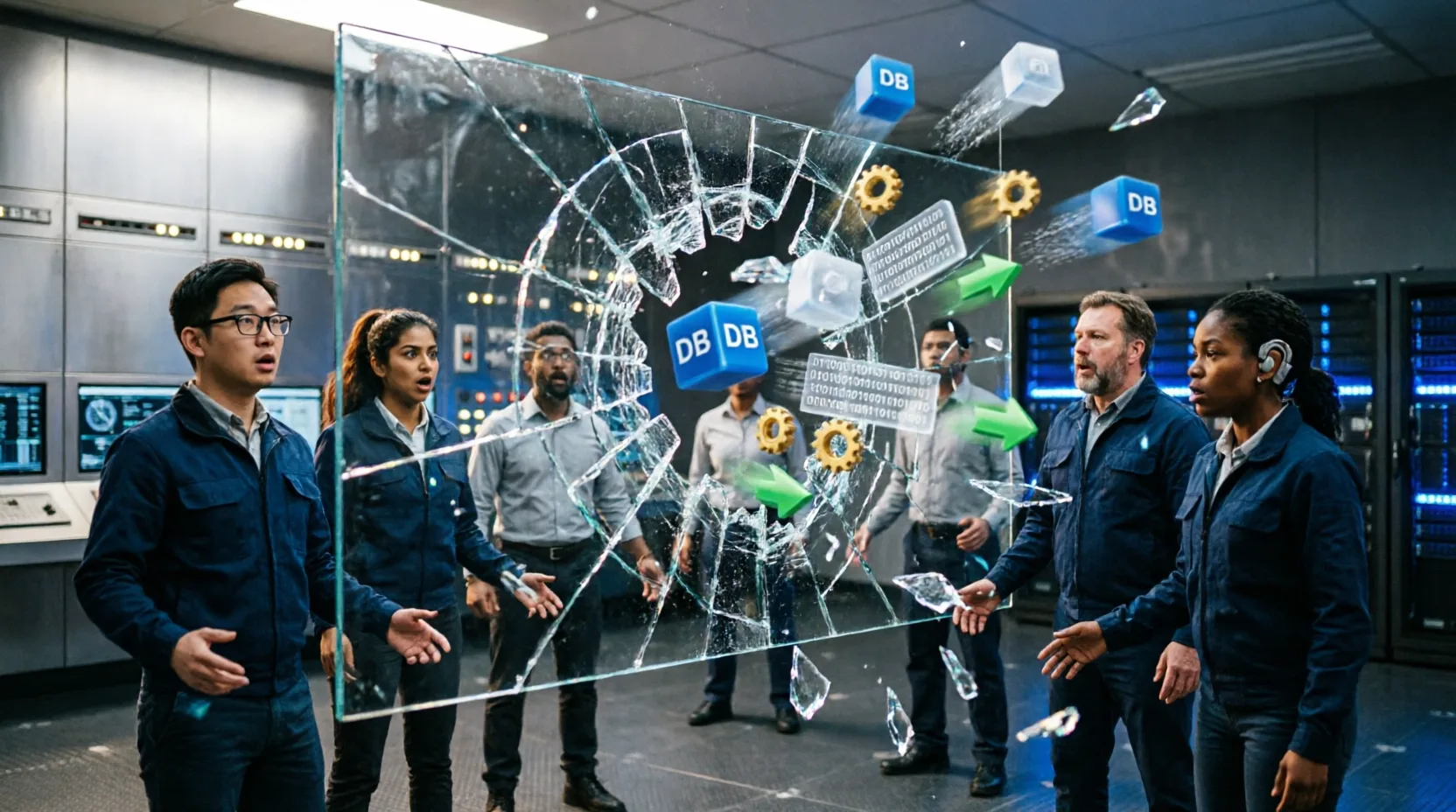
openSUSE migration-tool: reported facts, documented limitations, and discussion points
This document presents a validated analysis in a neutral, structured, publishable format, without concluding a general failure of the tool.
Impact diagram
Objective
Based on 2025-2026 public reports
Specific observed bugs
Side effects of major migrations
Community‑documented technical leads
Community‑discussed technical workarounds
Observation
In a documented case the migration stalled during conversion of an old bdb‑based RPM database, with a filesystem scriptlet failure leaving the system degraded. [source]
Verification
rpm --showrc | grep db_backendCommunity suggestion if backend is bdb
rpm --define='%_db_backend ndb' --rebuilddbGoal
Avoid the automatic conversion failure observed during migration.
Observation
A 2025 thread describes a case where SELinux was installed but inactive before migration, and several services failed to start after upgrading to Leap 16.0, with the tool apparently not triggering an automatic relabel. [source]
Community suggestion
touch /.autorelabel
rebootVariant (read‑only root)
touch /etc/selinux/.autorelabel
rebootGoal
Force a full file relabel to restore consistent SELinux contexts after migration.
Observation
Community feedback recommends simplifying the software environment before migration by temporarily limiting active repositories to reduce conflicts or inconsistencies between old and new sources. [source]
Community suggestion
- Fully update the system before migrating.
- Disable or remove non‑essential third‑party repositories.
- Keep only the core repositories recommended for the target distribution at the critical moment.
Observation
Some users describe a progressive approach: first run to see what the tool proposes, clean up repositories or adjust accordingly, then a second run to perform the full transition. [source]
Community suggestion
- Do an initial observation / preparation pass.
- Verify the repositories, options and proposed packages.
- Run the actual migration in a simplified environment.
- Reboot only after the process has truly finished.
Context: the tool’s place in the ecosystem
Experimental tool focusing on repository management and technical switches. Explicitly stated to be not ready for production until a proper test suite is in place.
The leapp tool is documented as a supported solution for major migrations, with strong emphasis on prerequisites and troubleshooting.
Maturity comparison, not a value judgement.
The project itself describes the tool as experimental. The team explicitly states it is not intended for production use until a satisfactory test suite is available.
Reported bugs & observed behaviours
bdb) RPM databaseOpen questions for the community
Is there an official recommended procedure to check or convert the RPM database before migration?
Should the tool automatically trigger a relabel in certain cases? Is there any public documentation about the expected SELinux behaviour?
Is a wording or logic change planned to resolve the observed ambiguity?
Does the tool detect third‑party packages or non‑official repositories?
Is there a public roadmap for moving the tool out of the “experimental” status?
Main references
openSUSE migration tool
Official project repository, source code and experimental documentation.
Hang after reboot (Jan. 2026)
System no longer boots after migration.
SELinux issue (Oct. 2025)
SELinux errors after migration, missing relabel.
“Dry run completed” message (Feb. 2026)
Misleading success message.
Leap 16 enters Beta (April 2025)
Experimental status of the migration tool confirmed.
Repository preparation & staged migration
Community discussion about simplifying repositories before migration and two‑step execution.
Migration progressive (March 2026)
Two‑step execution to reduce risks.
Recommended readings on SafeITExperts
To go deeper into migration and Linux / openSUSE security.
What’s new in openSUSE 2025: bridging heritage and innovation
Understand the evolution of the distribution and the challenges of cross‑version migrations.
systemd 2025: understanding Linux architecture & security
Essential for troubleshooting services that fail to start after a major upgrade.
Immutable operating systems: an architectural revolution
Explore new paradigms that could change the way we think about large‑scale migrations.
Linux kernels 2025: complete analysis
Security and performance insights that complement the low‑level aspects of a distribution migration.
👥 Comments
Comment on this article